
Family night does not need a themed shopping list or a room transformed before anyone arrives. The most repeatable version is usually something the household can manage when adults are tired and children have different preferences. Choose one idea, not an entire evening of programmed entertainment.
Phones can be put aside by agreement while remaining available for genuine care, accessibility or on-call needs. Adults should follow the same plan they ask children to follow. The point is a shared stretch of attention, not catching someone breaking a rule.
Choose for the energy in the room
If everyone is tired, use a read-aloud, simple game or short conversation. If children need movement, choose a safe walk or a small active start before sitting down. If ages differ, use parallel contributions: one child draws while another writes, or an adult partners with a younger player.
Offer two realistic options. A family vote is only useful when the adults can actually support either result. If one person does not want to perform, speak or make something, offer a quieter role rather than making participation a test of enthusiasm.
30 activities to choose from
Time and age labels are planning suggestions. Use the adaptations and provide the adult help your child needs.
1. The living-room library night
What you need: Books already at home. Cost: Use what you have.
Each person chooses a book, comic or magazine and finds a comfortable spot in the same room. Begin with one shared page, then read or browse separately. Keep the time short enough that younger children can join. End by showing one interesting picture or sentence, with no requirement to report on everything read.
Make it fit: Read aloud for nonreaders. Older kids can recommend a book to someone else.
Adult help: Shared family activity.
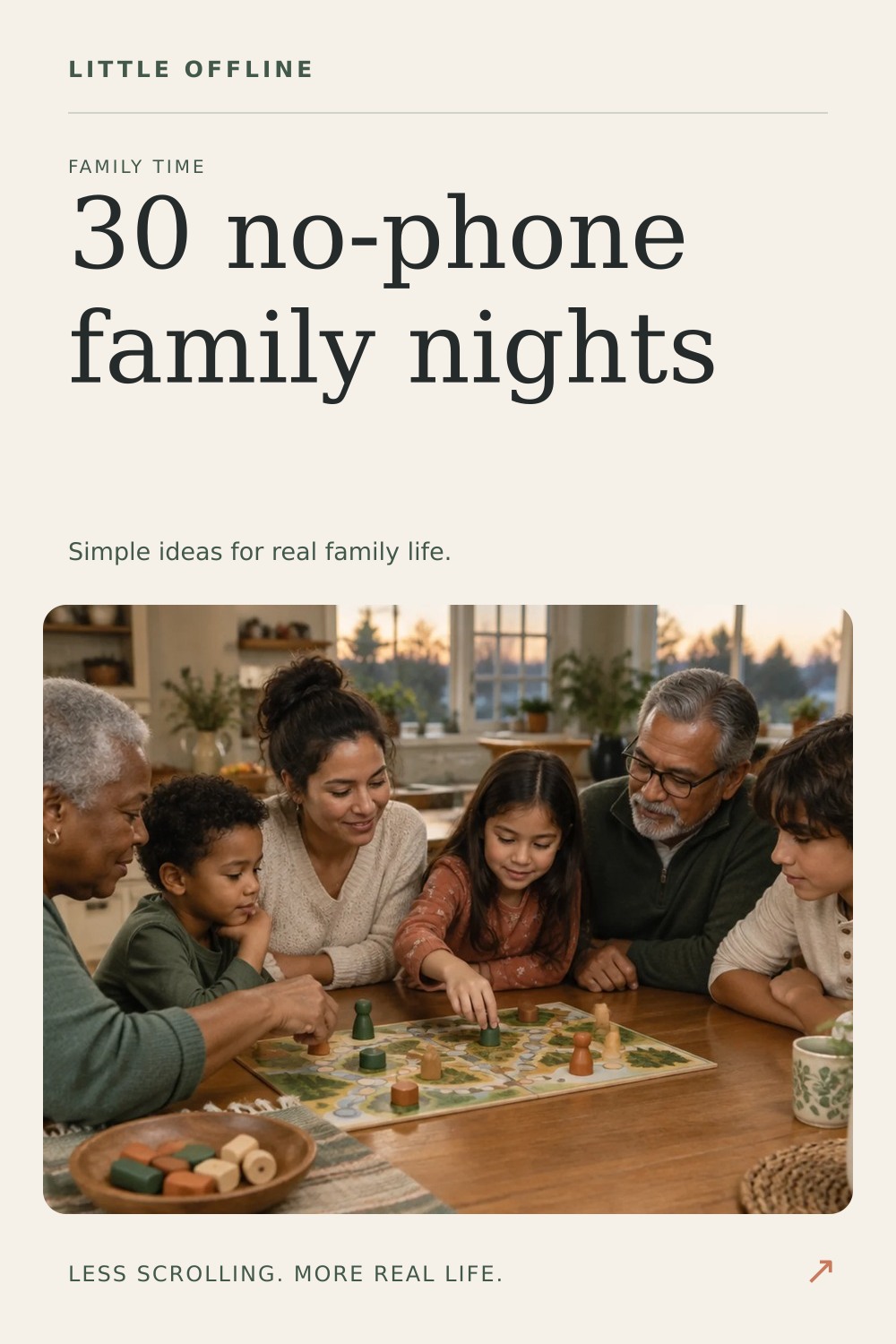
2. A board-game sampler
What you need: One familiar board or card game. Cost: Use what you have.
Choose a game whose rules most people already know and play one short round. Explain any adaptations before starting so they feel fair. If ages differ, pair players or use a cooperative goal. Do not make finishing the box’s full recommended session a condition of success; a pleasant stopping point is enough.
Make it fit: Younger kids can partner with an adult. Older kids can teach one rule at a time.
Adult help: Shared family activity.
3. The family drawing swap
What you need: Paper and crayons. Cost: Use what you have.
Give everyone a page and a simple theme, such as a place to have a picnic. After a few minutes, ask whether they want to swap pages for another person’s addition. Keeping your own page is allowed. Share the finished or unfinished drawings without ranking whose picture is best.
Make it fit: Younger kids can make marks. Older kids can add a story connecting the drawings.
Adult help: Shared family activity.
4. An indoor picnic
What you need: An ordinary meal and a floor blanket. Cost: Use what you have.
Serve a meal you already planned in a slightly different place, such as a clear patch of floor. Keep food handling, choking-risk preparation and allergies exactly as you would at the table. Add one conversation question and clean up together. The novelty is location, not an elaborate themed menu.
Make it fit: Younger kids can place napkins. Older kids can plan what carries safely.
Adult help: Shared family activity.
5. A story from your childhood
What you need: A willing adult and curious listeners. Cost: Use what you have.
Share one ordinary childhood memory: a game, a school lunch or a place you liked. Keep it age-appropriate and avoid turning the story into a comparison about how children should behave now. Invite questions and allow the child to tell a story of their own, real or clearly imagined.
Make it fit: Younger kids can ask one question. Older kids can sketch or write a detail afterward.
Adult help: Shared family activity.
6. The kitchen helper night
What you need: A familiar meal with safe child-sized tasks. Cost: Use what you have.
Choose one cooking task your child can do with appropriate adult help, such as washing produce or arranging prepared ingredients. Adults manage knives, heat, appliances and food safety. Keep the meal simple enough that helping does not create deadline pressure. Eating the result together is the activity’s natural ending.
Make it fit: Younger kids can stir a cool mixture with help. Older kids can read steps and measure.
Adult help: Shared family activity.
7. Build a shared comic
What you need: One large sheet and crayons. Cost: Use what you have.
Divide a sheet into panels and let each person own one part of a story. Agree on a main character and an easy goal before drawing. Read the panels in order and see how the different contributions connect. If the story makes little sense, that can be its charm; revision is optional.
Make it fit: Younger kids can draw one character. Older kids can connect scenes with captions.
Adult help: Shared family activity.

8. The household talent minute
What you need: A clear space and willing participants. Cost: Use what you have.
Invite anyone who wants to share one small skill: a joke, a drawing, a paper fold or a gentle movement. Watching is participation too. Keep applause kind and avoid scores or recording unless everyone agrees. One minute per person is a useful limit when attention and energy are low.
Make it fit: Younger kids can show a favorite toy’s trick. Older kids can teach a skill instead of performing.
Adult help: Shared family activity.
9. The puzzle corner
What you need: An age-appropriate puzzle. Cost: Use what you have.
Choose a manageable puzzle and spread it on a surface that can stay available for a little while. Start with a few obvious pieces together, then let people come and go. Keep small pieces away from younger siblings and children who mouth objects. A puzzle does not need to be finished tonight to be worth beginning.
Make it fit: Use large pieces for younger kids. Older kids can sort and offer clues.
Adult help: Shared family activity.
10. The family restaurant at home
What you need: A simple meal, paper and crayons. Cost: Use what you have.
Create a tiny menu for food that is genuinely available and assign a few pretend restaurant roles. Keep real cooking and hot dishes with adults. Switch roles so one child is not serving everyone all evening. End the restaurant when the meal ends instead of adding a long sequence of extra demands.
Make it fit: Younger kids can draw the menu. Older kids can take orders and help reset the table.
Adult help: Shared family activity.
11. A walk with one question
What you need: A safe adult-planned route. Cost: Use what you have.
Take a short walk and bring one open question, such as what should our imaginary park include. Talk when conversation comes naturally and leave space for quiet. Keep the route and duration realistic for the youngest walker and the weather. A loop around the block can be enough.
Make it fit: Younger kids can choose a favorite sight. Older kids can propose a route within adult limits.
Adult help: Shared family activity.
12. The family museum tour
What you need: Three household objects. Cost: Use what you have.
Each person selects an ordinary object and explains why it is interesting or meaningful. Avoid fragile or private items. Arrange a tiny exhibit and take turns as guides. The story can be genuine or clearly fictional, but no one needs to reveal something personal to participate.
Make it fit: Younger kids can show a favorite toy. Older kids can write museum labels.
Adult help: Shared family activity.
13. The kindness planning table
What you need: Paper and pencil. Cost: Use what you have.
Choose one small helpful act for someone you know: a note, returning a borrowed item or offering a specific task. Make sure the recipient would welcome it and an adult handles contact. Agree who will do what and when. Keep the plan small enough to complete without turning kindness into a performance.
Make it fit: Younger kids can draw a note. Older kids can organize a practical next step.
Adult help: Shared family activity.
14. The family flag night
What you need: Paper and crayons. Cost: Use what you have.
Design a flag with a symbol chosen by each participant. Discuss how to fit the symbols together without giving one person all the space. Display it temporarily or keep it in a family folder. The flag can change later; tonight’s preferences do not need to become a permanent family identity.
Make it fit: Younger kids can choose a color. Older kids can explain the layout.
Adult help: Shared family activity.
15. The paper-map adventure
What you need: Paper and crayons. Cost: Use what you have.
Draw an imaginary town and give each person responsibility for one place. Connect the places with paths and tell a story about visiting them. No real travel planning is required. Make the map on one sheet so it is easy to keep or recycle when the evening ends.
Make it fit: Younger kids can add a park. Older kids can design a transport system.
Adult help: Shared family activity.

16. The family question jar
What you need: Paper slips and a bowl. Cost: Use what you have.
Write or draw a few friendly questions, such as where would you build a reading nook or what would a perfect sandwich contain. Take turns choosing one and allow passing. Avoid questions that invite criticism of another family member. Keep the jar small and refresh it when the questions become familiar.
Make it fit: Younger kids can dictate questions. Older kids can add thoughtful follow-ups.
Adult help: Shared family activity.
17. The no-score game night
What you need: A familiar game adapted cooperatively. Cost: Use what you have.
Choose a game everyone understands and agree on a shared objective, such as completing a round together. Explain the changes before play rather than changing rules to rescue a result. If the game does not adapt well, choose another. The aim is a pleasant shared activity, not proving that competition is wrong.
Make it fit: Younger kids can team with an adult. Older kids can suggest fair adaptations.
Adult help: Shared family activity.
18. The read-and-draw evening
What you need: A short story and drawing materials. Cost: Use what you have.
Read a short passage aloud, then draw a place or character it suggests. People can keep listening while drawing or pause between sections. There is no correct illustration and no need to copy the book’s art. Share one detail at the end if everyone wants to.
Make it fit: Younger kids can draw colors or shapes. Older kids can illustrate a scene without showing the main character.
Adult help: Shared family activity.
19. The household invention lab
What you need: Paper and pencil. Cost: Use what you have.
Choose a small ordinary annoyance, such as lost socks, and invent an absurd or practical solution on paper. Sketch what the invention does and explain one limitation. Keep it imaginary unless an adult decides a safe simple prototype is worthwhile. A funny drawing and a short pitch are a complete outcome.
Make it fit: Younger kids can name the invention. Older kids can compare two designs.
Adult help: Shared family activity.
20. The family postcard exchange
What you need: Paper and crayons. Cost: Use what you have.
Each person makes a small postcard for someone in the household. Include a drawing or a specific friendly message. Let children choose what they want to say instead of dictating a sentimental script. Deliver the cards at the end of the evening and allow recipients to keep them privately.
Make it fit: Younger kids can draw a shared memory. Older kids can write a short note.
Adult help: Shared family activity.
21. The ordinary celebration
What you need: A familiar meal and one small ritual. Cost: Use what you have.
Celebrate something modest: returning all the library books, finishing a difficult week or finally fixing a squeaky door. Choose one small ritual, such as a toast with ordinary drinks or a funny family announcement. Avoid spending or elaborate decorations. The point is noticing progress that might otherwise pass unnoticed.
Make it fit: Younger kids can name the occasion. Older kids can choose the ritual.
Adult help: Shared family activity.
22. The shared hobby sample
What you need: Materials already available for one hobby. Cost: Use what you have.
Try a tiny version of a hobby, such as sketching, gardening or a simple handcraft. An adult handles any sharp tools or unsuitable materials. Keep the first attempt short and avoid buying a full kit before you know whether anyone likes the activity. Decide afterward whether to repeat, adapt or drop it.
Make it fit: Younger kids can do a parallel simpler task. Older kids can choose the next experiment.
Adult help: Shared family activity.

23. The family memory page
What you need: Paper, pencil and optional printed photo. Cost: Use what you have.
Choose one recent ordinary moment and make a page about it. Add a drawing, a few words and the date. Keep other people’s private information out of any version you share. One page is enough; you are making a small record, not catching up on years of unfinished albums.
Make it fit: Younger kids can choose the moment. Older kids can interview another participant.
Adult help: Shared family activity.
24. The choose-your-own evening
What you need: Two realistic activity options. Cost: Use what you have.
Offer two options that both fit the time and energy available, such as a story game or a short walk. Let family members vote, alternate choices or combine small versions. Be honest about limits before asking. A choice works better when it does not conceal a third option the adult already intends to impose.
Make it fit: Younger kids can point to pictures. Older kids can propose an option within the limits.
Adult help: Shared family activity.
25. The neighborhood noticing club
What you need: A safe walk and optional notebook. Cost: Use what you have.
Walk a familiar route and notice one change since the last visit: a new leaf color, a repaired path or a shop display. Keep observations respectful and do not inspect private property. Record one detail afterward if desired. The repeat route makes preparation simple while the changing details supply the interest.
Make it fit: Younger kids can point out a favorite. Older kids can keep brief field notes.
Adult help: Shared family activity.
26. The kitchen-table mini tournament
What you need: One short familiar game. Cost: Use what you have.
Agree on the number of rounds before starting and keep the total manageable. Use team play or a shared challenge when ages differ. Make room for disappointment without extending play indefinitely to secure a different winner. End with a neutral reset, such as putting pieces away and choosing tomorrow’s book.
Make it fit: Younger kids can play with support. Older kids can keep a simple score if everyone agrees.
Adult help: Shared family activity.
27. The make-a-gift workshop
What you need: Paper, crayons and safe craft materials. Cost: Use what you have.
Choose a recipient and make a small paper gift, such as a bookmark or illustrated note. Use materials already available and avoid promising a perfect result. Adults handle cutting or other tasks that require help. Check that the gift is appropriate and welcome, especially when giving to someone outside the household.
Make it fit: Younger kids can decorate a bookmark. Older kids can make a folded mini book.
Adult help: Shared family activity.
28. The family listening circle
What you need: A comfortable place to sit. Cost: Use what you have.
Invite each person to share one moment from the day while others listen. Passing is allowed, and advice waits unless requested. Keep the round brief so it does not feel like a compulsory meeting. End with a concrete next activity rather than trying to resolve every disagreement at bedtime.
Make it fit: Younger kids can show or draw a moment. Older kids can choose whether they want listening or help.
Adult help: Shared family activity.
29. The pretend travel agency
What you need: Paper and crayons. Cost: Use what you have.
Plan a fictional trip for a stuffed animal or story character. Choose a destination, a way to travel and three things to pack. Include one realistic constraint, such as a small bag or rainy weather. Keep actual bookings and spending out of the game; the fun is making choices together.
Make it fit: Younger kids can choose the traveler. Older kids can create an itinerary.
Adult help: Shared family activity.
30. The end-of-week reset ritual
What you need: A basket and ten minutes together. Cost: Use what you have.
Put a few shared items back where they belong, choose one pleasant plan for the weekend and stop. Keep the cleanup scope explicit so it does not expand into a whole-house project. The ritual should make the next day easier and leave time for rest, rather than become another exhausting family obligation.
Make it fit: Younger kids can return one item. Older kids can suggest a practical improvement.
Adult help: Shared family activity.
Give the evening a small structure
Begin with the activity choice and the phone agreement. Do one manageable round or project, then close with a simple reset: put away the game, choose the next book or name one thing worth repeating. Stop before the plan becomes another late-night obligation.
If the evening is interrupted, it still counts as time together. Return to the activity if practical or choose another day. A routine that survives ordinary family disruptions is more useful than one that depends on perfect conditions.
Useful for these ideas
Gather a few things. Then start.
We may earn a commission through shopping links, at no extra cost to you. These are editorial suggestions, not claims of hands-on product testing. Details.
Family games
Large dice for table games
For homemade board games and short rounds at the family table.
Check before you buy
Keep away from children who mouth objects; check the age label and use at a stable table.
Questions parents ask
How long should family night last?
Choose a length the household can realistically enjoy. One short game or a shared chapter can be a complete family night.
What if the children want different activities?
Offer two options, alternate who chooses or give separate roles within one theme. Avoid turning every choice into a long negotiation.
Save a little inspiration
Keep this idea for later.
Save the guide to your family activities board.
Save to Pinterest

