
The hour after school can contain a lot at once: hunger, tiredness, homework, bags on the floor and an adult trying to finish work. A polished schedule with six enrichment activities is unlikely to help. The routine needs to reduce decisions and meet the household where it is.
Start by observing the real pattern for a few days. Does your child want to talk, move, eat or be left quietly beside you? The answer may change. A routine can be consistent in sequence while flexible in the activity chosen.
A flexible sequence
| Part | What it can look like | Keep it realistic |
|---|---|---|
| Arrive | Put essential belongings in one agreed spot | Help if the child is overloaded |
| Meet needs | Food, water, bathroom and connection as appropriate | Do not make an activity a condition for basic needs |
| Choose a pace | Movement, quiet play or a short shared moment | Offer two suitable options |
| Do necessary tasks | Homework or household tasks when applicable | Use the child’s actual school requirements |
| Move into the evening | A clear transition to supper or the next plan | Give a concrete ending to play |
6 activities to choose from
Time and age labels are planning suggestions. Use the adaptations and provide the adult help your child needs.
1. Book picture expedition
What you need: A picture book you already own. Cost: Use what you have.
Open a familiar book and ignore the printed story for one round. Look for something tiny, someone who might be surprised and a place you would like to visit. Give your child time to explain what they see instead of turning it into a right-answer quiz. On the next page, let them choose the question.
Make it fit: Nonreaders can point. Confident readers can find a sentence that supports their interpretation.
Adult help: Adult nearby.

2. Build a reading island
What you need: A floor cushion, blanket and two books. Cost: Use what you have.
Create one comfortable spot on the floor with a cushion and a flat blanket. Let your child choose two books and decide which comes first. Keep the setup open and easy to see rather than draping fabric over unstable furniture. The island can be used for picture looking, reading aloud or quietly telling a story from memory.
Make it fit: Sit beside a younger child. Older kids can add a handwritten reading sign and choose a chapter stopping point.
Adult help: Adult nearby.
3. The color-family challenge
What you need: Crayons and paper. Cost: Use what you have.
Choose one crayon and fill a small rectangle with as many different marks as possible: dots, spirals, lines and broad shading. Make a second rectangle in another color, then decide what the marks remind you of. Limiting the supplies removes a choice without requiring your child to make a perfect picture or stay inside a complex design.
Make it fit: Younger kids can use large open space. Older kids can draw a whole scene using one color.
Adult help: Adult nearby.

4. Follow the gentle leader
What you need: A clear patch of floor. Cost: Use what you have.
Choose one leader to demonstrate three comfortable movements, such as reaching up, marching in place and making small arm circles. Everyone may adapt or skip a movement. Change leaders after one short sequence so the game does not become an exercise class. Leave enough room that arms cannot hit furniture or another person.
Make it fit: Offer a seated version. Older kids can remember a longer sequence.
Adult help: Adult checks space and supervises movement.

5. Mirror moves
What you need: A partner and clear space. Cost: Use what you have.
Stand or sit facing each other. One person moves slowly while the other mirrors them: lift a hand, turn a palm or make a gentle shoulder movement. Swap after a short round. Speed is not the goal. If copying feels frustrating, take turns making different movements and call it a conversation instead.
Make it fit: Younger kids can copy one hand. Older kids can try switching leaders without announcing it.
Adult help: Adult checks space and supervises movement.
6. Pack tomorrow’s bag
What you need: A bag and a short adult-approved checklist. Cost: Use what you have.
Lay out what tomorrow actually requires, such as a book, a water bottle and a spare layer. Let your child check off each item while packing, then an adult verifies essentials. Keep medication and other sensitive items under appropriate adult control. Unpack unnecessary toys together without turning the check into a surprise punishment.
Make it fit: Younger kids can choose one comfort item. Older kids can own a repeatable checklist.
Adult help: Adult guides the real task.
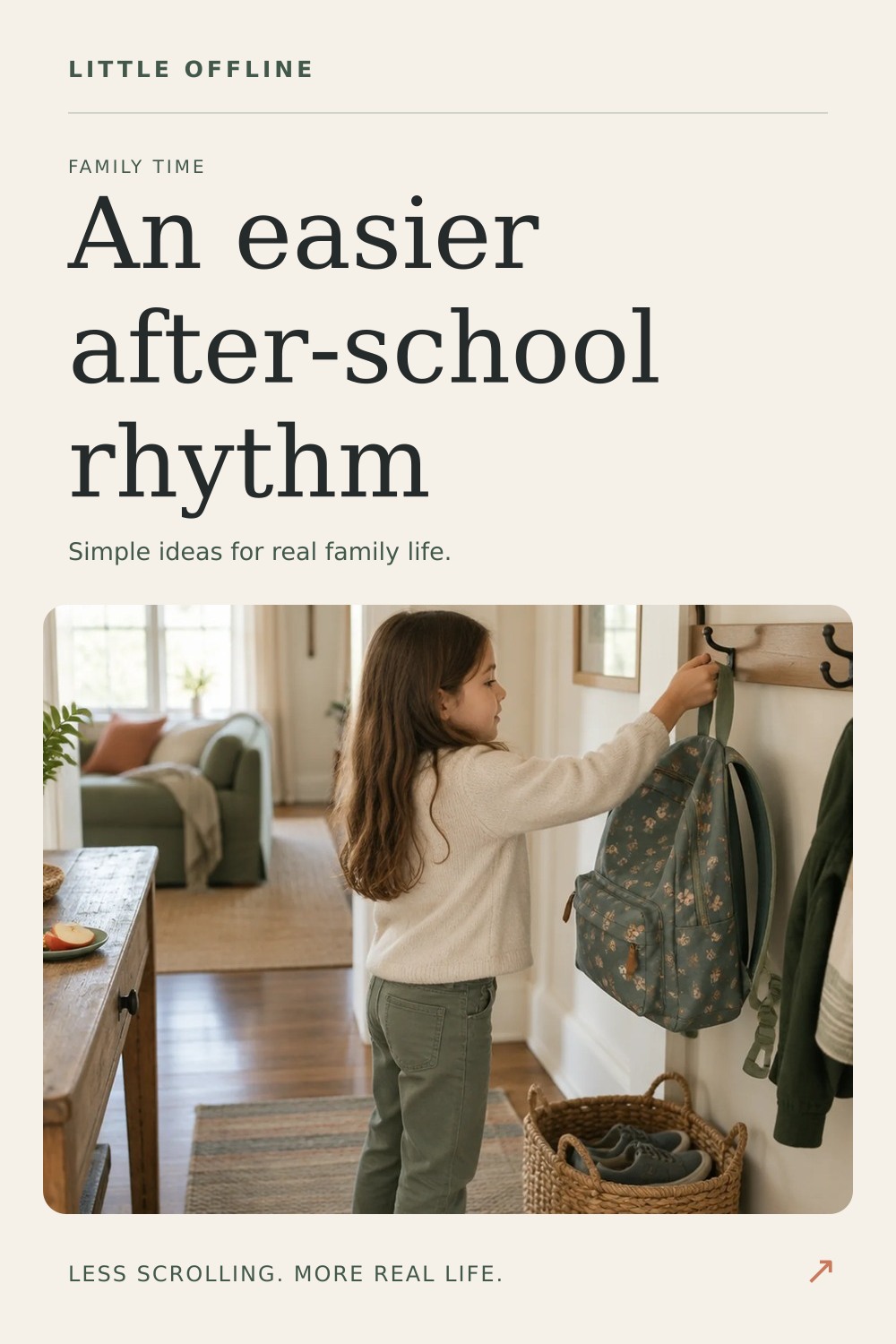
Make the landing zone small
Choose one place for the bag, shoes and items that need adult attention. A low hook and a clear patch may be enough. Avoid designing a storage system so complicated that it needs constant reminders. Show the routine together and adjust what is physically awkward.
Keep important school information and care needs with the responsible adult. A child can help unpack, but the adult still checks what needs attention. The routine should reduce missed essentials, not transfer more responsibility than the child can manage.
Offer the right kind of first activity
If your child wants company, start with a small shared book or conversation. If they need movement, use a safe short movement game. If they want quiet, offer a familiar activity without a long explanation. The activity should fit the transition rather than compete with it.
Do not interpret every refusal as a demand for more entertaining ideas. Sometimes the child needs rest, food, connection or fewer requests. A routine can include an unstructured pause.
Handle the phone or tablet agreement before the hard moment
Decide the broad screen plan at a calm time and explain it in concrete terms. Adults should follow the household agreements that apply to them and make genuine exceptions visible. An offline activity is easier to offer when it is part of a known routine rather than a surprise substitute.
The AAP Family Media Plan is one resource for discussing family technology habits. This article does not prescribe medical screen-time limits or claim a particular routine will resolve behavioral difficulties.
Review the routine after a normal week
Keep the parts that reduce friction and simplify the parts that require constant adult prompting. You may need a different version on activity days, in another household or when work runs late. Write the smallest useful sequence on paper and keep it visible.
A good routine is recognizable enough to guide the day and flexible enough to survive it. It does not need a new printable chart every month.
Useful for these ideas
Gather a few things. Then start.
We may earn a commission through shopping links, at no extra cost to you. These are editorial suggestions, not claims of hands-on product testing. Details.
Quiet time
A small open storage basket
Holds the few choices in a quiet-time basket or a shared phone parking spot.
Check before you buy
Check accessible contents for every child nearby; keep charging devices ventilated.
Questions parents ask
Should the first activity always be quiet?
No. Some children want movement or conversation first. Choose based on the child’s needs that day and the setting.
What if our afternoons change every day?
Keep a short sequence rather than fixed times: arrive, meet needs, choose a pace, do necessary tasks and transition to the evening.
Save a little inspiration
Keep this idea for later.
Save the guide to your family activities board.
Save to Pinterest

