
A useful packing list prevents two problems: forgetting something important and bringing so much that the useful item cannot be found. The lists below separate essentials from optional entertainment. Check each against your route, weather, accommodation and children’s needs rather than treating every item as mandatory.
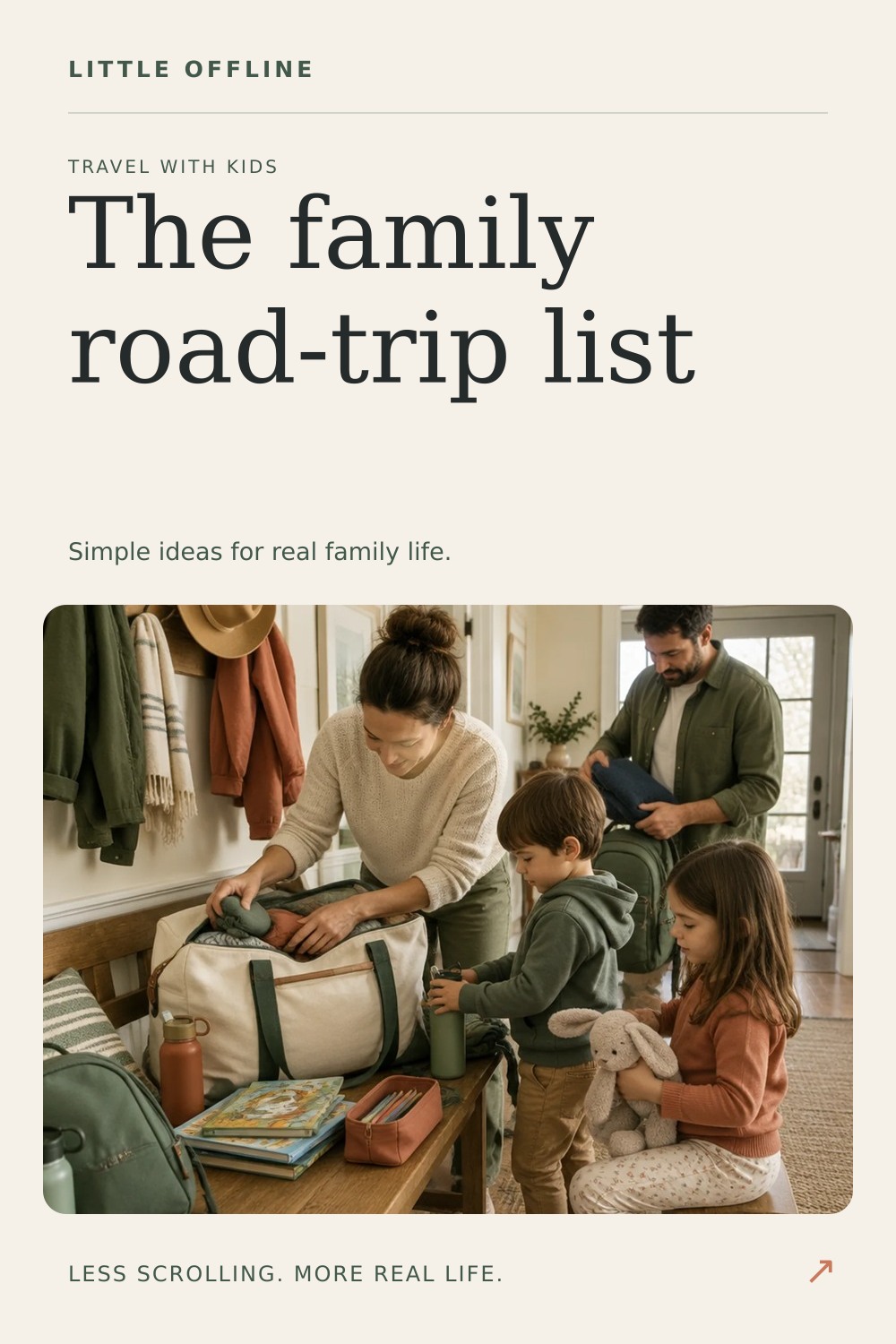
Pack one visible “next stop” bag for the things the family uses repeatedly. Keep the rest organized for arrival. This reduces the temptation to unpack half the vehicle during every break and makes it easier to notice what needs replenishing.
Before you load the car
Essential family items

Keep essential technology separate from entertainment choices
A screen-free activity plan does not mean traveling without navigation, emergency communication or accessibility tools. Charge the devices you rely on and keep them available to the responsible adult. The family can choose offline entertainment while still using technology for practical travel needs.
Avoid sharing detailed travel documents, addresses or real-time locations publicly. If children carry a paper itinerary, keep it broad enough for their role and leave sensitive information with adults.

The next-stop bag

A compact screen-free activity kit
What to pack by access level
| Location | Suitable contents | Why |
|---|---|---|
| Adult-managed essentials | Documents, medicines, route information | Important items stay under appropriate control |
| Reachable at a safe stop | Clothing changes, cleanup supplies, food | You can meet practical needs without searching every bag |
| Small passenger activity pouch | A few suitable quiet materials | One activity can come out without a spill of supplies |
| Arrival luggage | Most clothing and destination items | The driving space stays less cluttered |
Adjust for ages without doubling the luggage
For ages 3–4, prioritize familiar items and easy adult assistance. For ages 5–6, a small drawing kit and story games may offer useful variety. Ages 7–10 can help choose and check a personal pouch, but adults still verify safety and essentials. These are planning suggestions, not guaranteed preferences.
If children share supplies happily, one set may be enough. If a single pencil or notebook repeatedly becomes a dispute, duplicating that small essential may be worth the space. Skip duplicate bulky toys that serve the same purpose.
What to leave out
Leave behind heavy entertainment accessories that are not needed, loose small pieces that will be difficult to retrieve and activities requiring constant driver involvement. Check manufacturer instructions before adding anything near a child restraint, harness, seat belt, airbag or seat adjustment. Marketing language such as “universal” does not establish compatibility with your exact setup.
Avoid packing food or supplies in a way that creates access to choking hazards, medicines, sharp tools or cleaning products. Keep the driver’s controls and view clear. When in doubt about a restraint accessory, ask the appropriate manufacturer or a qualified child-passenger-safety resource.
The final five-minute check
Before departure, check the things that would most disrupt the trip if missing: documents, required care items, correct restraints, route information and a way to communicate. Then check one activity pouch rather than reopening every entertainment choice. Count comfort items before leaving stops.
After the trip, note the three things used most and the items that never came out. Use that evidence to simplify the next packing list. The best list is the one that becomes more accurate for your family over time.
Useful for these ideas
Gather a few things. Then start.
We may earn a commission through shopping links, at no extra cost to you. These are editorial suggestions, not claims of hands-on product testing. Details.
Travel & waiting
Diono Stow n Go
Compare the pocket-panel format with your exact vehicle and restraint instructions.
Check before you buy
Read the linked buying guide and the current manufacturer instructions before choosing.
Travel & waiting
High Road Entertainment Organizer
A deeper compartment format; measure clearance and verify attachment compatibility.
Check before you buy
Read the linked buying guide and the current manufacturer instructions before choosing.
Travel & waiting
A zippered activity pouch
Keeps the small kit from the busy-bag guides together.
Check before you buy
Measure the notebook first. Choose a simple closure and avoid long loose cords.
Questions parents ask
Should activity supplies go in a backseat organizer?
Only when the organizer is compatible with your vehicle and restraint setup and used according to instructions. A small adult-managed pouch may be simpler.
Can kids pack their own bags?
They can choose and pack age-appropriate items from a short list. An adult should verify safety, essential supplies and the final contents.
Sources & practical references
References checked September 16, 2026. Manufacturer pages describe products; they do not establish suitability for every child or setting.
Save a little inspiration
Keep this idea for later.
Save the guide to your family activities board.
Save to Pinterest

